 Image 1 of 1
Bio
Kristy Bishop (b. 1986)is a multidisciplinary artist whose work is rooted in weaving, natural dyeing, textiles, and reclaimed materials. Through slow material practice inspired by the natural world, Bishop explores the tactile relationship we have with cloth and how it relates to our modern world.
This summer she was an AIR at Texere in Oaxaca, Mexico and in October exhibited in the international textile show Carpet Diem in Paris. Her work has been featured in the Renwick Museum Store in conjunction with the exhibit Subversive, Skilled, Sublime: Fiber Art by Women. In 2024 Kristy had two solo exhibits, one at the Lyndon House Center for the Arts in the Atrium Gallery and at the Park Circle Gallery. Her work was also featured in Material World: A Contemporary Fiber Art Exhibition at the Fayetteville Arts Council as well as From Fiber, presented by Springfield Art Association of Illinois. Kristy has participated in residencies at the Gibbes Museum of Art, 701 Center for Contemporary Art and the North Charleston Cultural Arts Department. Her next exhibition will be a three person show at the Dalton Gallery in Rock Hill, SC in 2026.
Artist Statement
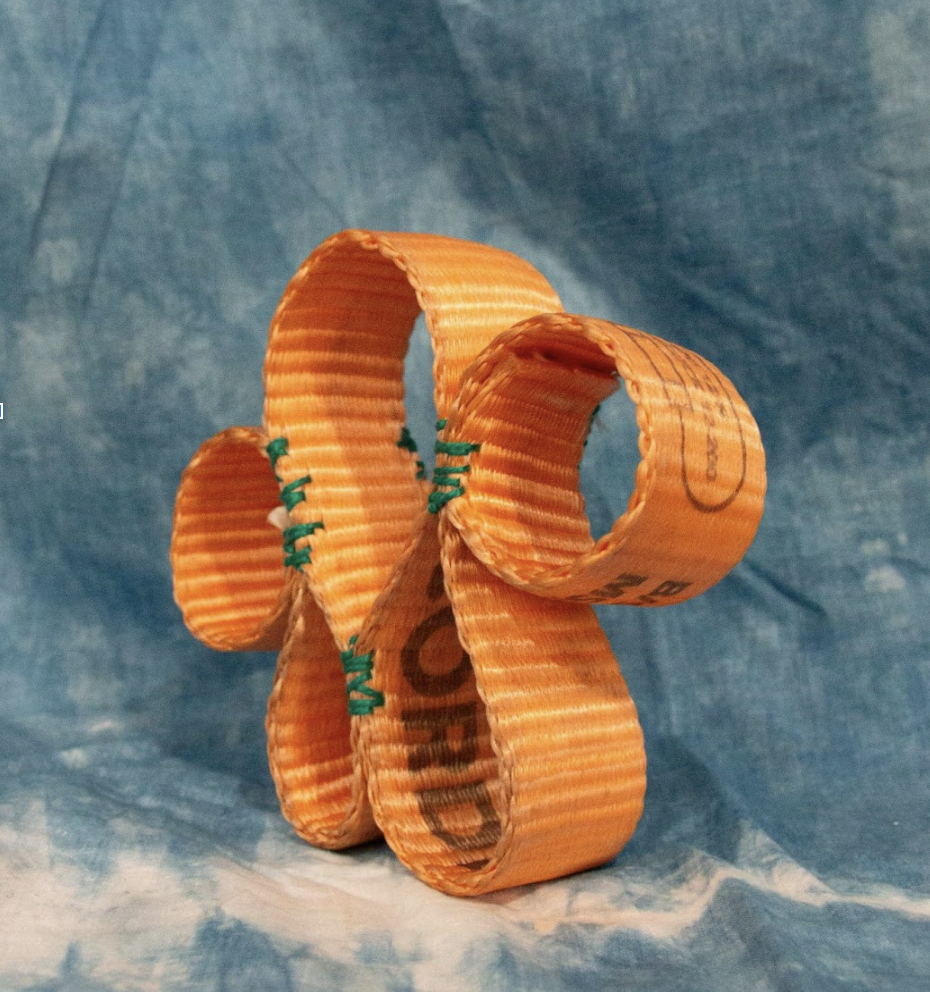
Kristy Bishop is a multidisciplinary artist whose practice is grounded in weaving, color relationships, and textile traditions. Her work embraces the slowness and intimacy of intuitive material processes in contrast to the rapid pace of change in our screen focused, convenience driven world. She creates pieces that are very bright and colorful, often with neon colors like safety orange (thank you ratchet straps) and slime green (thank you bankrupted Joann Fabrics).
Using the ratchet straps that are discarded at the Port of Charleston, Kristy manipulates the straps into continuous teardrop shapes that are hand sewn into place using contrasting yarns. This process is very intuitive and she makes decisions on the color and composition along the way. Each piece is modular and can be added onto, expanding, changing and growing. By repurposing these straps, Kristy highlights the nature of consumption, where even infrastructural resources are used, discarded, replaced and often overlooked. This work comments on the larger issue of unsustainable consumption and the environmental costs. By turning these ratchet straps into repetitive, organic shapes similar to fractals in leaves and coral, she is linking the material of nylon straps to the natural environment which it will eventually infiltrate and integrate with.